What to do and what not to do when you are around someone who is having an epileptic seizure. Most importantly: stay calm.
An epileptic seizure accompanied by a convulsion may seem like a dramatic and frightening event to an outside observer. However, it is important to remember two things:
The seizure usually lasts no more than a few minutes.
First aid for a person having a seizure can save their life or prevent serious injury.
If you are the parent of a child with epilepsy, or you are a relative of someone with epilepsy, the most important thing is to stay calm during a seizure. Staying calm is essential for providing first aid and protecting your loved ones from injury.
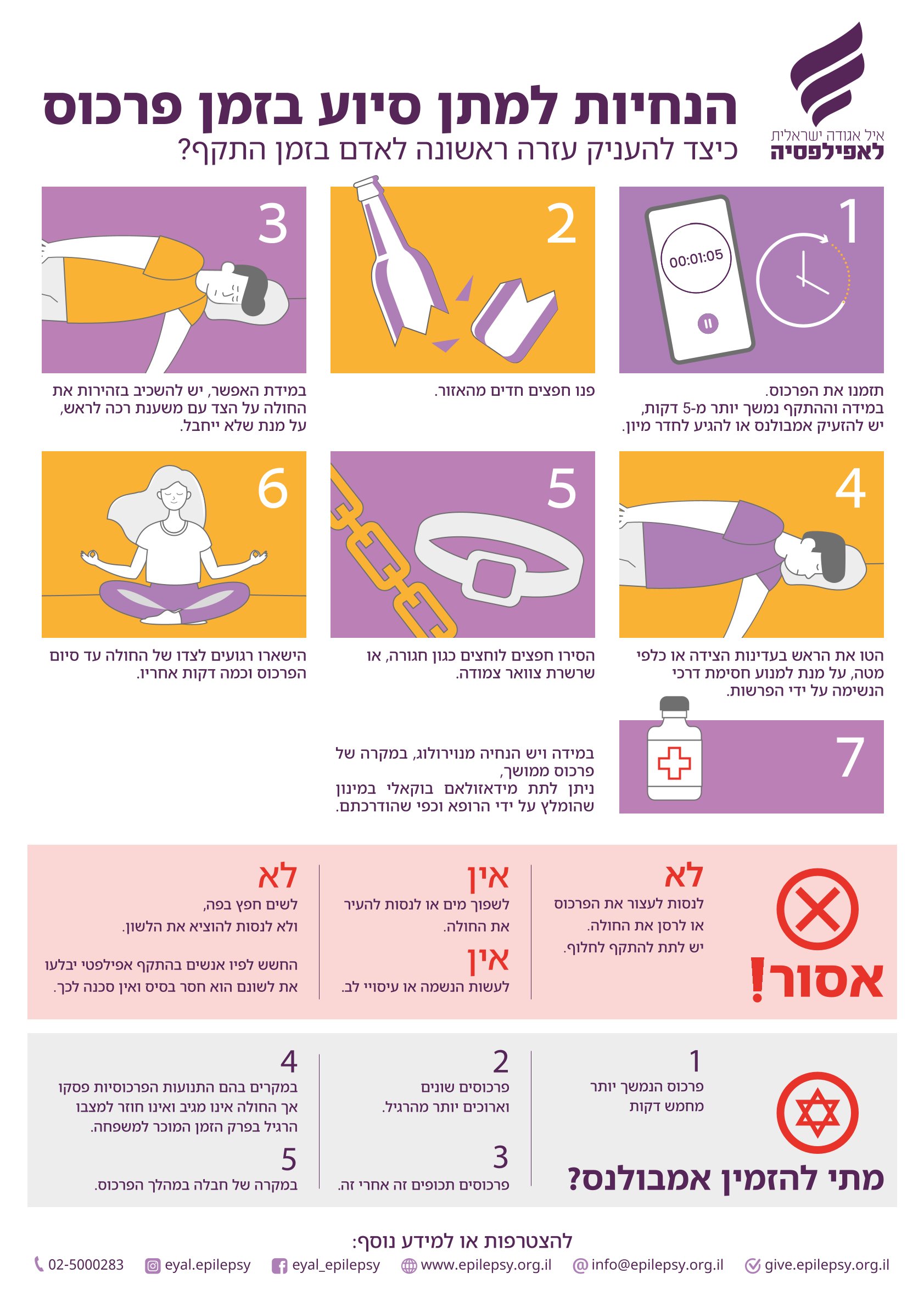
First aid for seizures including convulsions and loss of consciousness:
Time the seizure. If the seizure lasts more than 5 minutes, call an ambulance or go to the emergency room.
Remove sharp objects from the area.
If possible, the patient should be carefully laid on his side with a soft headrest so that he does not get injured.
Tilt your head gently to the side or down to prevent the airway from being blocked by secretions.
Remove any pressing objects such as a tight belt or necklace.
Stay with the patient until the seizure ends and a few minutes after, as there is a risk of another seizure.
To download a page of guidelines for behavior during a seizure, click here.
What not to do under any circumstances:
Do not try to stop the seizure or restrain the patient. Let the seizure pass.
Do not put things in the patient’s mouth.
Do not open the patient’s mouth, and do not try to pull out their tongue. The fear that people having an epileptic seizure will swallow their tongue is unfounded and there is no danger of this. Only if the seizure occurred during a meal and there is food in the patient’s mouth, can it be gently pulled out.
Do not perform mouth-to-mouth resuscitation.
Do not pour water on the patient.
Do not offer the patient food or drink.
Do not crowd around the patient.
When should an ambulance be called?
You should call for help from a rescue agency such as MDA in the following cases:
A seizure that lasts more than five minutes.
Frequent seizures one after another.
Seizures are different and longer than usual.
In cases where the convulsive movements have stopped but the patient does not respond and does not return to his normal state within the period of time known to the family.
In case of injury during the seizure.
Using Bokulam
If there has been a previous experience of a prolonged seizure, rectal diazepam (Stesolid) or buccal midazolam
(Buccolam) or Rivotril drops can be given orally, at the dosage recommended by the attending physician, and at the same time call for help if necessary.
To download a page of instructions for administering bucolam, click here.
Our YouTube lecture on emergency treatments to stop a seizure